Storage and Power Behind the Finish
The aesthetic woodwork of a mobile home is simply the skin. The bones, heart, and nerves are the electrical wire runs, the master breaker panels, the fresh water manifolds, and the structural mounts bolting cabinetry into the vehicle's chassis ribs. When you compromise on what lives behind the plywood, you gamble with fire and flood.
The Electrical Backbone: 12V vs 24V vs 48V
For decades, recreational vehicles survived on basic 12-volt DC circuits running halogen bulbs and a 3-way fridge. Modern van dwellers demand high-draw induction cooking, 2000W+ inverters, Starlink satellite dishes, and occasional air conditioning.
12-Volt High-Current Architecture
Ideal for: Builds with modest power demands (100–300Ah LiFePO4), standard LED lighting, 12V compressor coolers, and diesel air heaters.
Trade-off: Massive copper cable diameters (e.g. 2/0 to 4/0 AWG) required between battery and 2000W inverter to avoid voltage drop and heat buildup.
24V / 48V Modern Micro-Grid
Ideal for: Full off-grid induction cooking, off-grid rooftop AC units (Nomadic or Dometic RTX), and heavy video editing workstations.
Trade-off: Requires dedicated step-down DC-to-DC converters to feed common 12V accessories like water pumps and roof ventilation fans.
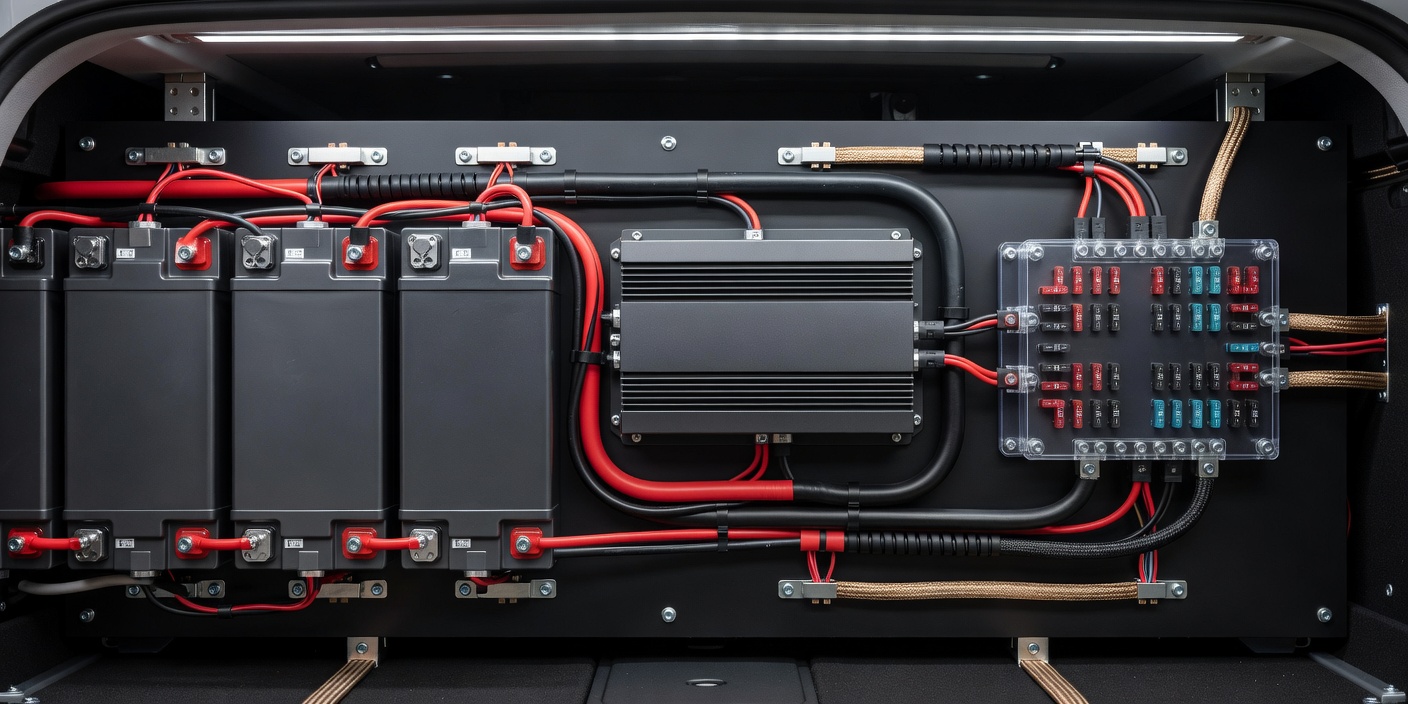
Critical Electrical Safety Constraints
1. Overcurrent Protection at the Battery Post: Never run a positive cable from a lithium battery bank without a Class-T or Mega fuse within 180 mm (7 inches) of the positive terminal. Lithium cells can dump thousands of amperes in a short circuit, melting inferior automotive blade fuses into molten plastic.
2. Marine-Grade Tinned Copper Only: Never install solid residential copper wire (such as Romex). High-vibration chassis environments fatigue solid conductors, snapping strands and initiating invisible electrical arcs inside wall cavities.
3. Dedicated Chassis Ground Bus: Isolate chassis negative return loops through a central copper busbar to prevent parasitic battery drain and erratic sensor interference.
Overhead Locker Engineering: Rivnuts and Aluminium Angle
Overhead storage cabinets endure immense dynamic forces whenever the vehicle hits emergency braking or navigates bumpy mountain switchbacks. Wood screws driven directly into sheet metal will inevitably pull free over time.
Professional converters use threaded steel or stainless Rivnuts (Plusnuts) compressed directly into the van's structural ceiling ribs. A continuous 30x30 mm structural aluminium angle is bolted to these Rivnuts with M6 or M8 bolts and Loctite threadlocker. Cabinet bulkheads are then through-bolted into the aluminium frame, creating an integrated safety cage that stays anchored during severe impact.
"If you cannot hang your full body weight from the edge of an overhead locker without hearing the frame groan, you have no business filling it with cast-iron pans and canned food."
Garage Organization & Center of Gravity
The space underneath a fixed bed (commonly dubbed the "garage") carries the heaviest equipment: battery banks, water tanks, spare tires, and recovery gear.
- Keep Water Forward and Low: Locate fresh water tanks (often 80 to 120 kg when filled) over or slightly forward of the rear axle, never behind it. Positioning excessive weight aft of the rear axle lightens the front steering tires and creates hazardous sway.
- Separate Wet and Dry Compartments: Build a sealed, marine-varnished bulkhead between your electrical management board and your water plumbing manifold. A pinhole leak in a water strainer must never spray across a 3000W inverter.